
Schweizerbart/Borntraeger Science Publishers
Acerca de nosotros
Schweizerbart and its affiliate company Gebr. Borntraeger publish and distribute printed and electronic scholarly journals, book series and monographs. We are privately owned and operated by scientists, independent we do provide all services related to publishing and marketing scientific content worldwide in print and electronic form.
Schweizerbart Science Publishers was founded by Emanuel Schweizerbart in 1826 as a publishing house with an emphasis on historical works. Shortly after its foundation, the program changed and Schweizerbart concentrated on publishing scholarly journals and books in the sciences, mainly Earth and environmental sciences, aquatic ecology, anthropology, medicine, zoology.
Gebr. Borntraeger publishers were founded in 1790. It has an active program in the Earth and environmental sciences.
Dirección
Johannesstr. 3A
70176 Stuttgart
Germany
Correo electrónico: mail@schweizerbart.de
Teléfono: +49 711 3514560
Internet: www.schweizerbart.de
Productos y servicios
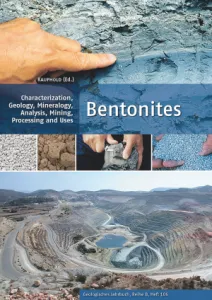
Bentonites
Bentonites are specific types of clay, commonly formed by weathering of volcanic ash.
Bentonites can adsorb more water and other substances than other clays. Because of their unique properties, great abundance, and relatively low cost of exploitation and production, bentonites are used in numerous applications.
Bentonites are indispensable for iron ore processing and casting of iron, oil drilling (drilling mud), refining vegetable oils, beverage production and even pharmaceutical applications.
Furthermore, bentonites will soon be used to isolate highly radioactive waste from the surrounding environment.
Bentonite formation starts with the alteration of volcanic ash or other materials containing siliceous glass. This publication provides a review of current knowledge of bentonite formation and a new systematic approach to understand the underlying physicochemical processes.
Analysing bentonites and understanding the behaviour of bentonites in different technological processes remain challenging. Some aspects are not yet completely understood, such as the effect of particle size and morphology on the rheological properties of bentonite.
The authors discuss available analytical methods, their possibilities and limitations with special reference to the relationships between the properties of a bentonite and its performance.
This publication introduces (data) and discusses a set of 40 bentonite/clay samples from all over the world. It includes compositional and mineralogical data for these samples, making it a valuable reference on bentonite clays worldwide.
Finally, the expert authors provide information on the wide range of bentonite applications in various fields, which has rarely been compiled in a single volume before.